
Driven by digitalization, the Internet of Things (IoT) technology is gradually becoming a key force in improving the efficiency of security and monitoring. By connecting various sensors and devices to the Internet, IoT realizes real-time data collection, transmission and analysis, providing solid technical support for building an efficient and intelligent security protection system.
Internet of Things technology to enhance real-time security monitoring
Traditional security monitoring often relies on manual inspection or timed inspection, there is a response lag, incomplete coverage and other issues. The introduction of Internet of Things (IoT) technology allows safety monitoring to realize all-weather, all-round real-time tracking. Through various types of sensors deployed in key areas, such as smoke detectors, temperature sensors, intrusion alarms, etc., the IoT system can collect environmental data in real-time, and trigger an alarm as soon as an abnormality is detected, which will be quickly transmitted to the monitoring center or relevant personnel through the network. This instant response mechanism greatly shortens the time from hidden danger discovery to emergency disposal, effectively reducing security risks.
IoT data analysis to enhance early warning and prediction capabilities
IoT is not only a data collection and transmission tool, but also a powerful data analysis platform. Through the large amount of data collected, the IoT system is able to use advanced algorithms to conduct in-depth mining and analysis to discover potential safety hazards and patterns. For example, by analyzing historical fire data, IoT systems can predict high-risk periods and areas for future fires and deploy preventive measures. In addition, IoT can also realize remote monitoring and fault prediction of equipment, detect and deal with equipment faults promptly, and avoid safety accidents caused by equipment faults.

IoT promotes the intelligent integration of security and monitoring
The development of IoT technology promotes intelligent transformation in the field of safety and monitoring. Through integration with other intelligent systems, such as intelligent video surveillance systems and face recognition technology, IoT systems are able to build a more complete security protection network. These systems are capable of automatically identifying intruders, tracking abnormal behavior, and linking with security monitoring systems to form a closed-loop security management chain. At the same time, IoT also supports connection with personal devices such as smartphones and smartwatches, enabling users to receive security alert information anytime and anywhere, enhancing personal security protection.
IoT applications for security and monitoring in daily life
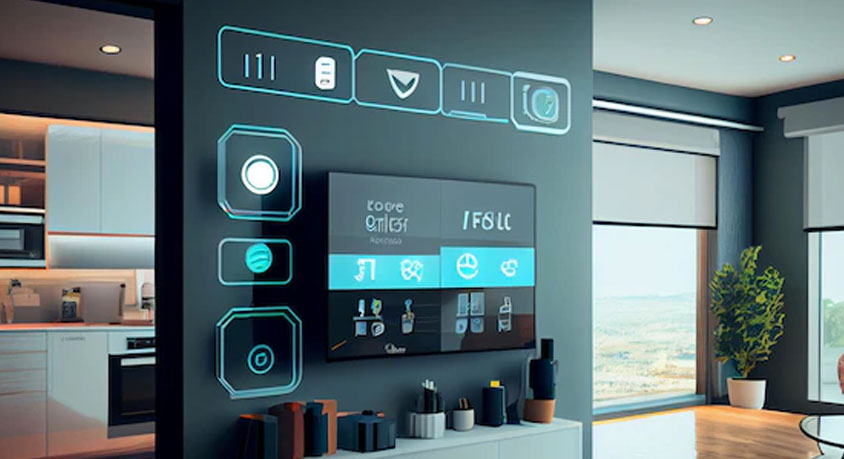
The application of IoT in security and monitoring is not only limited to the industrial field, but also widely penetrated into people's daily life. Taking smart home as an example, through IoT technology, users can realize remote monitoring and management of home security. When there is an abnormal situation at home, such as fire, theft, etc., the smart home system will automatically trigger an alarm and send a notification to the user through the cell phone APP. In addition, IoT technology also helps the construction of smart cities by deploying sensors and monitoring devices in all corners of the city to realize comprehensive monitoring and management of urban security, which improves the overall security level of the city.
The application of IoT technology in the field of security and monitoring greatly improves the detection efficiency and effectiveness, and provides strong support for the construction of an efficient and intelligent security protection system. We believe that with the continuous progress of technology and the continuous expansion of application scenarios, IoT will play a more important role in the future, leading the field of security and monitoring into a new stage of development.