
Sensor Market Development and Demand Changes
The global sensor market is expanding in size and facing upgraded demand as materials and sensor technologies continue to evolve. Especially in the booming IoT application field, the role of sensors is becoming more and more critical, and new demands are emerging.
Challenges and shifts in IoT sensor power supply
Currently, some IoT sensor applications are characterized by a wide range of deployments and remote distances, which brings brand new challenges to sensor power supply. In traditional sensor design, the power supply of sensor nodes has been the focus of system design. In the past, sensors with wired connections or battery power supply had fewer power outages and relatively convenient battery replacement.
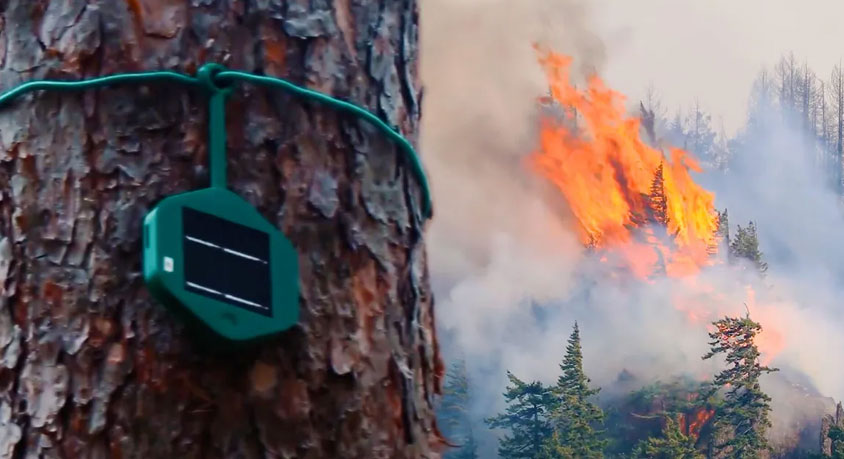
However, in application scenarios that require long-term monitoring, where batteries are difficult to replace and long-distance wired connections cannot be supported, traditional power supply methods face significant challenges. To cope with this dilemma, sensors are accelerating to "passive" direction change.

Sensor self-powered energy sources and technologies
In the absence of grid wiring and batteries, the technology of sensors extracting tiny energy sources from the environment to realize self-energy extraction and self-supply has become a hot trend in the industry. This technology enables IoT sensors to work autonomously in a battery-less, wiring-less environment and enable IoT connectivity, a perfect fit for IoT applications that are deployed over wide ranges and distances.
These tiny sources of energy that can be captured are varied and may be radiant, kinetic, temperature difference, or radio frequency. Sensors internally convert this energy into electrical energy for use through specific conversion mechanisms. For example, piezoelectric sensing harvests vibrational energy and thermoelectric sensing harvests temperature difference energy. These energy sources are ubiquitous in the environment and require no additional maintenance, opening up the possibility of self-powered sensors.
Sensors like infrared sensors, radar detection equipment, etc., acquire information about a target by receiving infrared or electromagnetic radiation from it. The radiated energy generates conductive channels inside the component, which in turn powers the continuous operation of the sensor. This continuous power cycle is the ideal operating state for sensors in this development trend.
Problems and Solutions for Energy Conversion Applications
This type of energy conversion application faces the challenge of converting a small amount of power. Therefore, specialized energy management hardware ICs are required to improve conversion efficiency, while the sensor's own operating losses must be low enough to get as close as possible to the ideal model of self-sufficiency.
Breakthroughs are being made in technologies that capture wireless RF signals (e.g., Wi-Fi, Bluetooth, NFC, etc.) and convert them into electrical energy. This direction makes full use of the RF signals in the environment. When the sensor works, it can obtain energy from the RF radiated power sensor interface through the RF signal.
NFC-based power design, the distance is usually shorter, belongs to the proximity of the inductive coupling, instantaneous high power is conducive to instantaneous power supply applications; Bluetooth-based power design power frequency coverage, the theoretical power distance is farther, is located in the middle and long-distance range of radio frequency power.